


Two tools, one decision per window
Squeegee or pole, decided at the glass
We carry both on every truck and choose at each window, not at the driveway. The same house can get the pole upstairs, the squeegee on the French doors, and both on a slider with sprinkler haze.
The manual squeegee
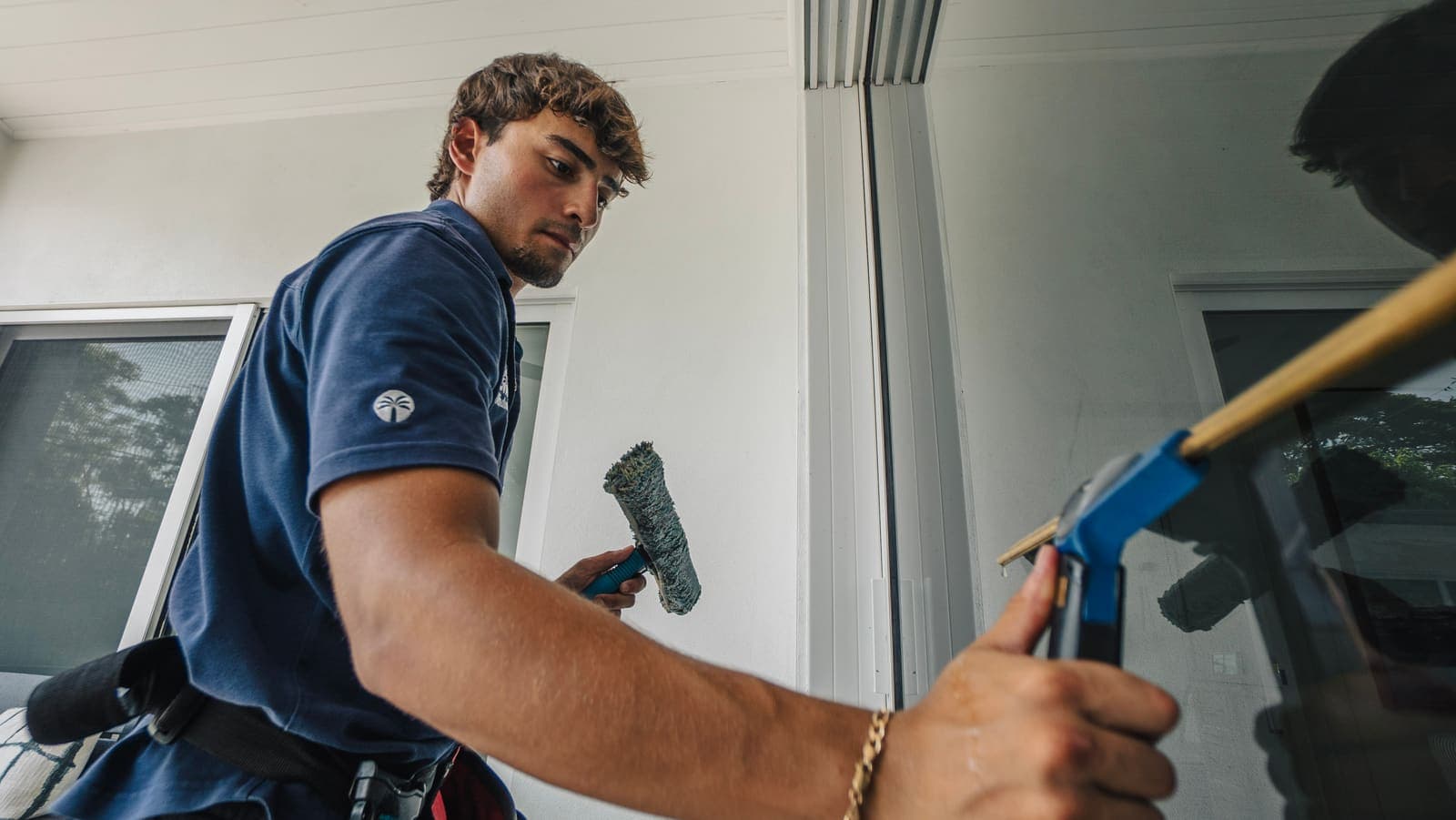
A wetted mop and a rubber blade. The mop works the surface, so it lifts what a rinse alone won't — cooking film, fingerprints, pollen, sunscreen — and the blade pulls the water off in one pass so nothing dries on the glass. Interior glass, ground-floor and patio glass, doors with heavy hand traffic, and anything tinted or coated.
The water-fed pole
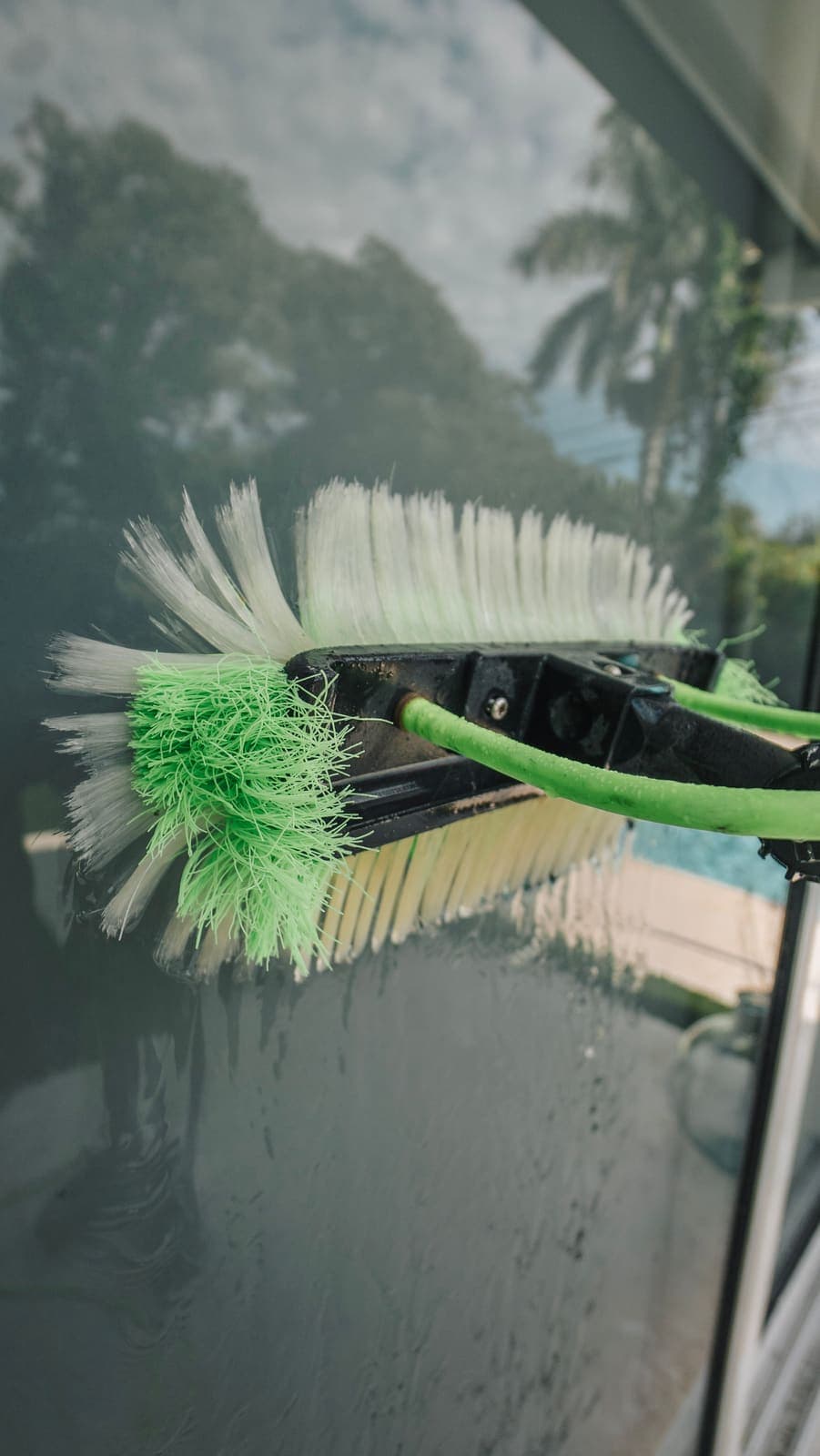
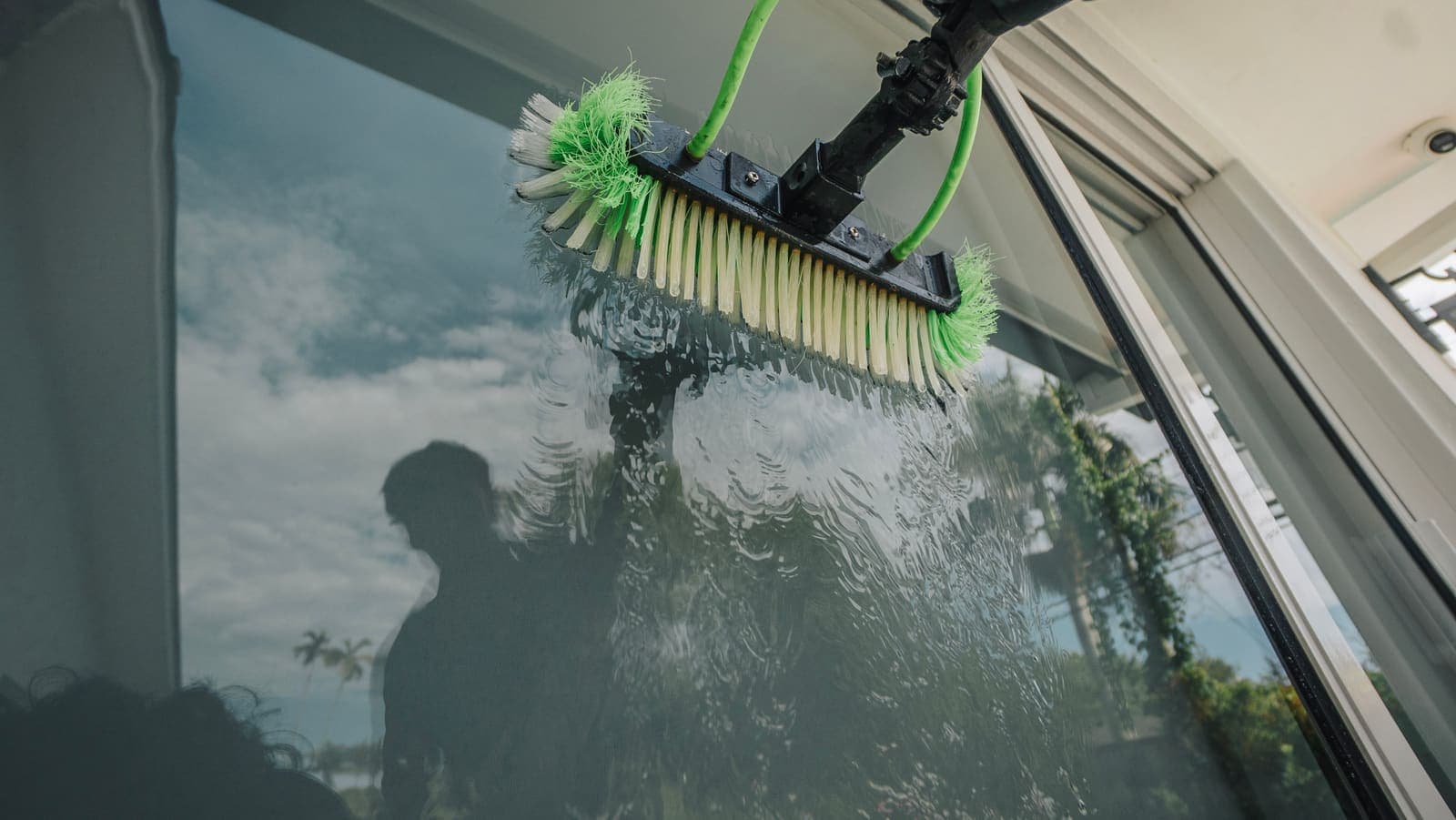
A soft brush on a carbon-fiber pole fed with deionized water from the truck. It scrubs the glass and the frame, the flow carries the dirt off, and because the water has no minerals in it the final rinse dries clear. Three stories from the ground — no ladder on your roof tiles.
The rinse
The last pass is clean deionized water only, top to bottom, frame included, so there is no dirty runoff onto glass we just finished. Then each pane gets a look in raking light before we move on.
Every window is different
Why the choice changes window to window
- Reach. A ground-floor slider gets the squeegee. The transom above the front door, the second-floor bathroom window, the clerestory over the stairs — those get the pole, because the pole is safer than a ladder and gets the glass just as clean.
- What’s underneath. If the window sits over a pool, an AC unit, a fountain, a hedge or a barrel-tile roof, nobody is standing there with a bucket. The pole works from wherever we can plant our feet on solid ground.
- Glass condition. A rinse won’t touch hard-water spotting, paint overspray, sticker residue, or the oxidation that builds up on old glass under a screen. That glass gets hand work first, then whichever rinse finishes it.
- Framing. Old wood frames with peeling paint shed flakes when they’re brushed, so we go lighter and finish by hand. Deep aluminum frames hold water in the channel and need the sill dried. Impact glass with a laminated edge is cleaned so water doesn’t sit against the seal.
- Access. A pane behind a fence, over a neighbor’s wall, inside a screened enclosure, or on a balcony that only opens from inside gets whichever tool we can actually get to it.
- Tint and coatings. Film applied to the inside of glass scratches easily, and exterior low-e coatings don’t like acids or abrasives. Both get soft tools, mild solution and a light hand.
So the same house can get three approaches, and that’s normal. What we don’t do is pick one tool at the truck and force every window through it.
The parts most cleaners skip
What we do differently
Tracks
A clean pane over a track full of sand and mildew still looks unfinished, so the sill and the visible track get wiped on every visit. When the track is packed — the door drags, the weep holes are blocked, there’s a black line where water sits — we vacuum it dry, scrub the channel with a track brush, rinse it, clear the weep holes and towel it dry. That full detail is its own service because it takes real time on a big slider, and it’s the difference between a door that glides and one that fights you.
Screens come out
You can’t clean the outside of a window through a screen, so we take the screen out, clean the glass, and put it back in the opening it came from. Screens that need it get washed on both sides with a soft brush, rinsed, and dried before they go back — a wet screen against clean glass leaves dust streaks. Anything torn or with a loose spline gets pointed out so you know what to replace.
No water spotting
Spots are minerals left behind when tap water dries on glass, which is why we never let it. Exterior rinses are deionized water; interior work is squeegeed dry and detailed with a towel; and the last thing we do at each pane is look at it in raking light for anything we missed. If a sprinkler head is hitting the glass, we tell you, because that’s what causes the white spotting that keeps coming back.
Cleanup
Drop cloths go under interior windows on rugs and wood floors, and shoe covers go on at the door. Furniture that was moved goes back where it was, blinds come down, the hose gets coiled, the gate gets closed. Then we walk the house with you before we leave, inside and out, so anything you want another look at gets it while we’re still there.
Every service, the same standard
Where this process applies
The method above is how we work on every job. Each service page explains what’s included and answers the questions we get most.
- Exterior Window Cleaning →
- Interior Window Cleaning →
- Screen Cleaning →
- Window Track Detailing →
- Hard Water Removal →
- Commercial Window Cleaning →
- Membership →
If you’d rather not think about any of this again, the Coast membership puts your home on a monthly, quarterly or twice-a-year schedule with the same crew each visit.
This page is how the work gets done. Meet the team to see who does it.
Free quote
Get a firm quote today
Send the form and we call you back with a firm number. Or skip the form and call now.
Call (786) 551-4337 now